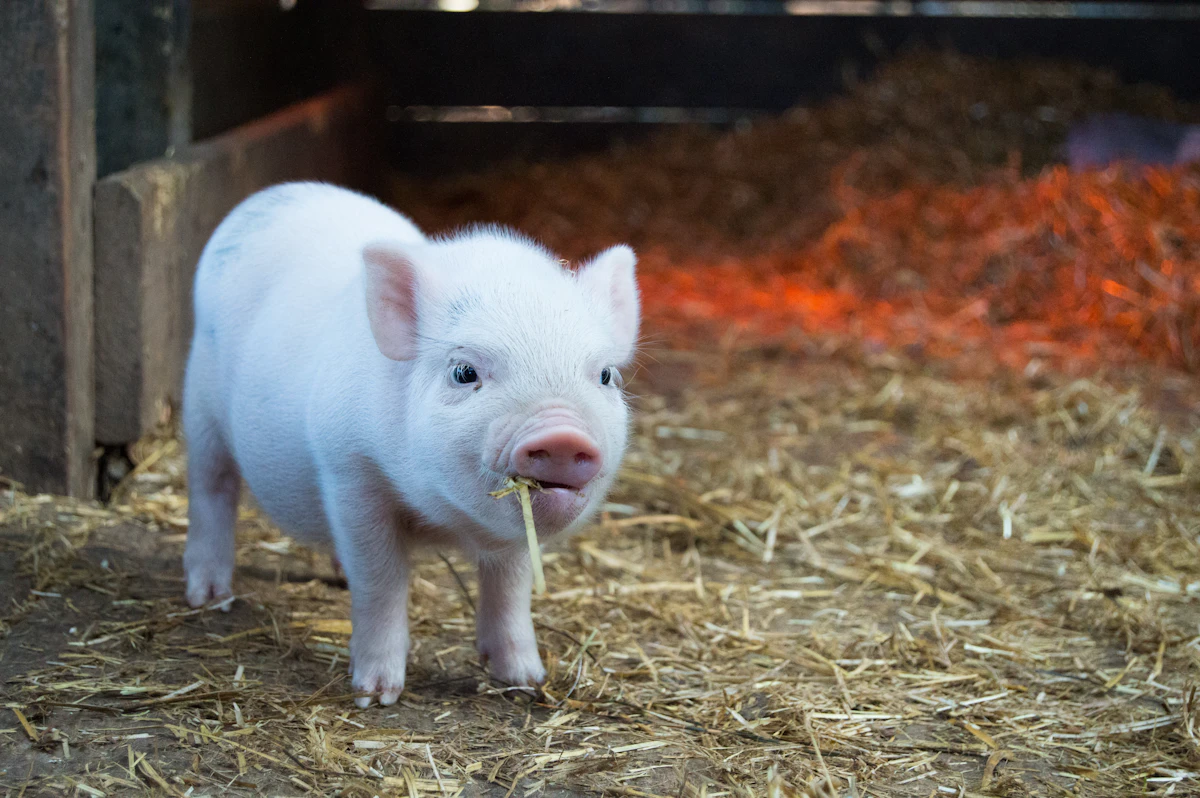
A group of rabbits is called a COLONY. In addition to colony, a group of wild rabbits living together in an underground burrow system is frequently called a warren, a group of domestic pet bunnies is playfully called a flipple, and a group of newborn baby rabbits is called a litter or a nest.
While the quick answer is straightforward, understanding why English has multiple overlapping terms for rabbit groups reveals fascinating details about language history, wildlife biology, speciation, and companion pet care. In this definitive terminology reference guide, we examine each term in depth, present a clear "Which Word Should You Use?" decision framework, explain the historical origins of terms like warren and herd, explore why cottontails and hares do not form colonies, examine bonded pair psychology, and provide practical context for pet owners managing multi-rabbit households.

Which Word Should You Use? Quick Decision Guide
To help you choose the exact right word for any writing, educational, or conversational scenario, use the decision reference table below:
| If You Are Describing... | Best Term to Use | Why This Term Is Correct |
|---|---|---|
| A wild community of rabbits sharing a territory | Colony | Scientific and biological benchmark for social lagomorph communities |
| An underground burrow network & its residents | Warren | Historical term describing subterranean tunnel systems and their occupants |
| Two pet rabbits living happily together | Bonded Pair | Standard term used by exotic vets, animal rescues, and companion owners |
| A small group of pet bunnies hopping together | Flipple | Charming, popular colloquial term specifically created for companion bunnies |
| A group of newborn baby bunnies | Litter or Nest | Describes siblings born together from the same pregnancy |
| Commercial or livestock farm rabbits | Herd or Drove | Agricultural terminology used in farm animal management contexts |
Deep Dive into Terminology & Historical Origins
Why does English have so many words for a group of rabbits? The answer lies in medieval history, hunting traditions, and the evolution of natural science.
1. The Origin of "Warren" (Norman French & Medieval Law)
The word warren traces back to the Anglo-Norman French word garenne, which referred to a game preserve or land licensed by the king for keeping small game animals like rabbits and pheasants. In medieval England, a "free warren" was a royal franchise granted to landowners allowing them to hunt rabbits.
Over centuries, as wild European rabbits dug vast underground tunnel networks across English estates, the term shifted from legal property law to describe the physical underground tunnel network itself—and eventually to describe the resident group of rabbits inhabiting those burrows.
2. The Origin of "Colony" (Modern Zoology)
As animal behavior emerged as a formal biological discipline in the 19th and 20th centuries, scientists needed a precise term distinct from physical burrows. They adopted colony (from the Latin colonia, meaning a settled community) to define the social population of wild European rabbits (Oryctolagus cuniculus) occupying a shared home range.
3. The Modern Emergence of "Flipple"
Language is constantly evolving. In recent decades, as rabbits transitioned from wild game and farm livestock into beloved indoor family pets, pet enthusiasts sought a word that captured the endearing, playful nature of house bunnies. "Flipple" emerged in digital pet communities and animal trivia books as a charming alternative to formal terms like colony.
Biological Speciation: Why Cottontails & Hares Do Not Form Colonies
A common point of linguistic and biological confusion is assuming that all wild rabbit-like creatures form colonies. In reality, lagomorph speciation creates vastly different social behaviors:
1. Chromosomal & Genetic Differences
European rabbits, American cottontails, and hares belong to different genera within the family Leporidae and possess distinct karyotypes (chromosome counts):
- European Rabbits (Oryctolagus cuniculus): 2n = 44 chromosomes. The ONLY species that digs complex subterranean warrens and forms social colonies.
- American Cottontails (Sylvilagus floridanus): 2n = 42 chromosomes. Solitary animals that do not dig warrens, living above ground in shallow grass depressions.
- Hares and Jackrabbits (Lepus americanus): 2n = 48 chromosomes. Solitary, long-legged surface runners that give birth to precocial young with open eyes and full fur.
Because cottontails and hares are solitary, group terms like "colony" or "warren" do not apply to them. A rare group of hares is referred to historically as a drove or a husk.

Wild Social Structures vs. Domestic Companion Relationships
The terminology we use directly reflects the underlying social structure of the rabbits involved. Comparing wild colonies to domestic pet relationships highlights key behavioral differences:
Wild Rabbit Communities: Multi-Male, Multi-Female Colonies
In nature, European rabbits are obligatory social creatures. A wild colony functions as a complex cooperative defense unit. Features of a wild colony include:
- Subterranean Living: Digging extensive warrens with shared central bolt-holes and separate breeding chambers (stops).
- Dominance Hierarchies: Separate linear dominance rank orders among adult males (bucks) and adult females (does).
- Sentinels & Warning Signals: Grazing rabbits serve as lookouts, thumping hind feet to sound underground alarms when predators approach.
- Group Scent Marking: Colony members rub submandibular chin glands on rocks and entryways, creating a shared communal scent. Discover more about rabbit communication in our rabbit behavior portal.
Domestic Pet Relationships: Pairs, Trios & Rescues
Inside a human home, pet rabbits do not dig multi-acre warrens, but they retain their intense biological need for lagomorph companionship. In domestic settings, group terms take on practical pet-care meanings:
- The Bonded Pair: The vast majority of house rabbits live as a bonded pair (one spayed female + one neutered male). Once bonded, they spend 90% of their time within a few feet of each other.
- The Bonded Trio: Three spayed/neutered rabbits living together. Trios require extra space, multiple litter boxes, and careful bonding oversight.
- Rescue Groups & Sanctuary Flocks: Animal shelters and rabbit rescues sometimes maintain larger bonded groups of 4 to 8 spayed/neutered rabbits in large free-roam rooms.
The Psychology of Bonded Pair Attachment: Grooming & Separation Grief
In domestic companion settings, a bonded pair forms an extraordinary emotional attachment. Understanding pair psychology is vital for house rabbit owners:
1. Grooming Reciprocity & Mutual Trust
A stable bonded pair engages in constant grooming reciprocity. One rabbit will lower its head beneath the partner's chin, asking for grooming. The partner licks the forehead, eyes, and ears for several minutes before swapping positions. This mutual grooming lowers blood pressure and reinforces emotional safety.
2. Partner Loss & Grief Protocol
Because bonded pairs are deeply attached, the death of one partner triggers intense grief in the surviving rabbit. A grieving rabbit may stop eating, lethargically sit in a corner, and decline rapidly into fatal GI stasis.
When a bonded rabbit passes away, allow the surviving partner to spend 1 to 2 hours with the deceased body so it can process death naturally. Provide extra affection, offer tempting herbs, and consider introducing a stuffed animal surrogate until the survivor is ready for a new spayed/neutered companion.

Practical Context for Rabbit Owners: Managing Group Health & Housing
If you are caring for a pair, trio, or group of domestic bunnies, proper husbandry keeps your group peaceful and healthy:
1. Spaying and Neutering Is Mandatory
Attempting to keep a group of un-neutered rabbits leads to violent territorial battles, severe injuries, and explosive reproduction. Spaying females prevents malignant uterine cancer and curbs territorial aggression. Neutering males stops spraying and sexual frustration. Explore care tips in our rabbit health section.
2. Territory & Resource Allocation
In a multi-rabbit group, dominant rabbits may attempt to guard resources. Always provide:
- At least 1 large hay rack per 2 rabbits (or one giant central hay trough).
- Multiple heavy ceramic water bowls placed in different corners.
- Multiple litter boxes so subordinate bunnies are never trapped. Check out setup designs in our rabbit housing guide.
- Multiple hideout boxes with two exit doors so no bunny gets cornered.
Evolutionary History: From Iberian Monasteries to Global Warrens
Understanding the history of lagomorph terminology requires tracing the domestication of the European rabbit (Oryctolagus cuniculus):
1. The Iberian Peninsula Origins
Wild European rabbits evolved approximately 6 million years ago on the Iberian Peninsula (modern Spain and Portugal). When Phoenician traders visited the region around 1000 BCE, they mistakenly believed the abundant rabbits were rock hyraxes and named the land I-shephan-im (Land of Hyraxes)—which the Romans later Latinized into Hispania, the root of modern "Spain"!
2. Medieval French Monasteries & The Domesday Book
Rabbits were domesticated by French monks around 600 CE. Medieval monks discovered that newborn kits were considered aquatic flesh (laurices) by Church dietary laws, allowing them to be eaten during Lent. By 1086 CE, King William the Conqueror's Domesday Book formally established royal warren laws across England, granting nobility exclusive rights to maintain subterranean rabbit warrens for meat and fur.
Building an Ideal Indoor Sanctuary for a Bonded Pair
Creating a safe, enriching home environment for a bonded pair or small group of pet bunnies requires meeting specific spatial and behavioral needs:
- Minimum Floor Space: A bonded pair requires a minimum of 24 square feet of continuous enclosed living space (e.g., a 4ft x 6ft exercise pen), plus daily free-roam exercise time in a bunny-proofed room.
- Fleece & Foam Flooring: Hard hardwood or tile floors lack traction and cause ulcerative pododermatitis (sore hocks). Layer memory foam mats under washable fleece blankets to protect hind heel joints.
- Cardboard Maze Tunnels: Construct interconnected cardboard boxes with 2 exit holes per box. Tunnel mazes mimic subterranean warren passages, satisfying natural burrowing instincts. Discover housing setups in our rabbit housing guide.
Diagnostic Framework: Evaluating Group Harmony vs. Aggression
Use this diagnostic checklist to determine whether your multi-rabbit group is experiencing healthy bonding or dangerous territorial tension:
| Observed Behavior | Bonding Status | Underlying Meaning | Action Required |
|---|---|---|---|
| Side-by-side flopping & mutual grooming | EXCELLENT | Complete trust, shared scent, and stable social bond | Maintain current routine & housing |
| Soft teeth purring while resting together | EXCELLENT | Deep relaxation and emotional comfort | No action needed |
| Brief mounting / chinning without fur pulling | NORMAL HIERARCHY | Dominance clarification during territory expansion | Supervise closely; do not interrupt unless fighting starts |
| Tail up, ears pinned back, rapid circling (chasing) | WARNING TENSION | Territorial dispute or unresolved dominance struggle | Separate immediately using a cardboard barrier; return to neutral dates |
| Locking together in a rolling fur-pulling ball | CRITICAL FIGHTING | Violent aggression; high risk of deep bite wounds | Separate immediately using heavy towels; separate housing permanently until vet evaluation |
Managing Single Rabbits: Preventing Loneliness & Depression
If keeping a single rabbit without a bonded partner, human family members must act as the rabbit's social colony:
- Daily Human Interaction: Provide at least 3 to 4 hours of direct interaction daily. Sit on the floor at eye level while reading or working to allow the rabbit to hop over, nudge your hand, and solicit forehead pets.
- Visual & Acoustic Enrichment: Leave a soft radio or television playing low ambient sound when away from home to reduce feeling isolated.
- Stuffed Animal Companions: Offer a soft, non-toxic plush stuffed bunny. Single rabbits often cuddle, groom, and rest against plush toys for emotional comfort.
Historical Legal History: The Medieval Royal Free Warren
To fully grasp why the word warren carries such deep historical weight in the English language, one must examine medieval British property law. Following the Norman Conquest of England in 1066, King William the Conqueror declared all wild game across the realm to be royal property.
The crown established a legal franchise called a Free Warren. Landowners granted a royal free warren Charter were legally authorized to construct artificial rabbit mounds called coneygarths or clappers. These earthwork mounds were built with soft sandy soil to encourage wild rabbits to burrow. Heavy stone walls or deep water moats surrounded the coneygarth to keep out poachers and foxes. The resident rabbit group living inside the coneygarth was referred to in court documents as the "warren stock." This historical legal framework cemented the word "warren" in the English language for nearly a thousand years!
Multi-Rabbit Feeding Schedules & Mealtime Etiquette
When feeding a bonded pair or small colony of pet rabbits, maintaining proper mealtime etiquette prevents dominant bunnies from stealing food or causing stress:
- Scatter Feeding Leafy Greens: Rather than putting all daily fresh greens into a single small dish, scatter leafy greens (Romaine, cilantro, parsley) across a clean fleece mat or hay rack. Scatter feeding allows all rabbits to forage simultaneously without physical crowding.
- Synchronized Pellet Treats: When offering daily Timothy pellet rations, use two separate bowls placed 3 feet apart. Hand out pellets to both rabbits simultaneously so neither bunny feels deprived.
- Hydration Bowl Placement: Place heavy ceramic water bowls in open areas away from dead-end corners so subordinate rabbits can drink freely without feeling trapped by a dominant partner.
- Observing Mealtime Grooming Signals: After eating, bonded rabbits typically engage in mutual face cleaning. If one rabbit routinely shoves its head under the other's mouth immediately after eating, it is communicating a polite demand for post-meal grooming. Recognizing these subtle head-bowing cues helps owners verify that social harmony remains intact.
Manage Multi-Rabbit Records & Group Health
Keeping track of weight graphs, grooming schedules, vet visits, and health notes across a group of bunnies requires organized record-keeping. Use our free, local-first BunnyBasicsHQ Rabbit Manager to track health metrics securely on your own device with complete privacy.
Frequently Asked Questions: A Group of Rabbits Is Called What?
What is a group of rabbits called in 1 word?
In one word, a group of rabbits is called a COLONY (or a WARREN when referring to wild rabbits residing in an underground burrow system).
Is a group of rabbits called a herd?
While "herd" is sometimes used in commercial farm livestock settings, it is rarely used for wild or domestic pet rabbits. "Colony" is the preferred biological term.
What is a group of pet bunnies called?
A group of domestic pet bunnies is commonly called a bonded pair (for 2 rabbits), a trio (for 3 rabbits), or informally a flipple.
Do all rabbit species live in colonies?
No. Only European rabbits (Oryctolagus cuniculus)—which includes all domestic pet rabbit breeds—live in colonies and dig warrens. American cottontails and wild hares are solitary animals.
What is a group of hares called?
A group of hares is called a drove or a husk. Hares are a different species from rabbits and do not live in warrens or colonies.
9. Historical Etymology: Norman French & Old English Lagomorph Origins
The English language features unique terminology for rabbits due to historical linguistic shifts following the Norman Conquest of England in 1066. Prior to the Norman Conquest, Old English speakers used the word hara (hare) to refer to wild lagomorphs, as wild European rabbits were not yet native to the British Isles.
The Normans introduced European rabbits to Britain from France as managed livestock for meat and valuable fur, referring to them in Anglo-Norman French as coney or conie (derived from the Latin cuniculus). For centuries in medieval England, adult rabbits were called "conies," while the word "rabbit" originally referred exclusively to newborn or juvenile rabbits.
Over time, as the word "coney" fell out of common usage due to rhyming slang and linguistic shifts, "rabbit" became the standard noun for both young and adult animals. Understanding these historical etymologies enriches our appreciation of modern collective nouns like "colony," "nest," and "warren."
Sources & Further Reading
- House Rabbit Society: Rabbit Social Structure & Bonding Overview
- Rabbit Welfare Association & Fund (RWAF): Companionship Requirements for Domestic Rabbits
- Merck Veterinary Manual: Biology and Social Behavior of Rabbits
- Oxford English Dictionary: Etymology and Origins of Warren and Colony